

🇬🇧 English edition — Portuguese version here.
“When intellectual work is automated, unemployment ceases to be an economic problem: it becomes a civilizational question.”
— Dario Rodrigues
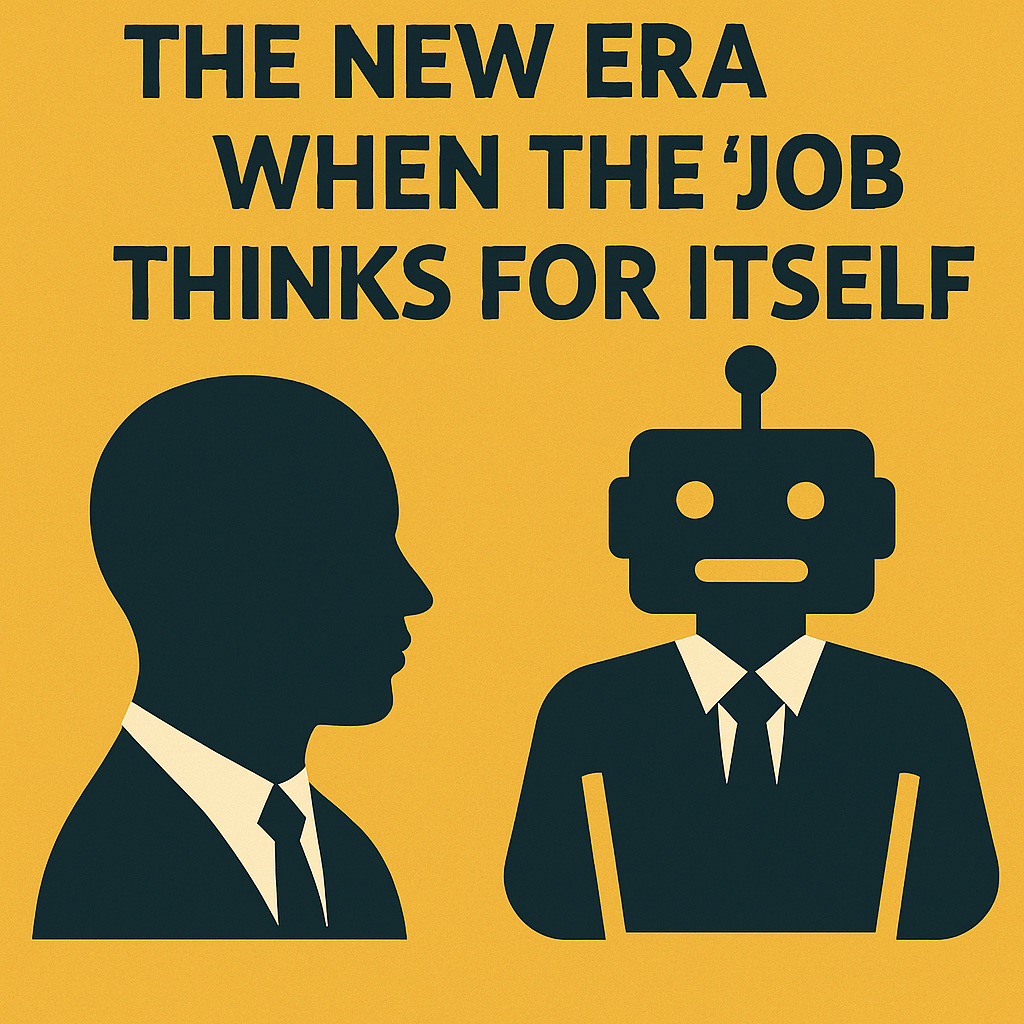
The “job” that thinks for you — and soon, for itself.
As generative AI evolves from assistance to autonomous cognition, even high-skilled professions are being automated.
OpenAI is hiring former Wall Street bankers to teach algorithms how to automate financial work — a perfect symbol of our age, where today’s experts are training the AI that will replace them tomorrow.
For centuries, technology has displaced physical labor.
Now, for the first time, machines don’t just do — they think, decide, and create.
“White-collar” jobs — once symbols of stability and status — are becoming an endangered species. Consultants, managers, lawyers, and marketers are being replaced by generative systems with exponential intelligence and zero marginal cost that think and work for them.
As the remuneration for answers approaches zero (a reality that the ubiquity of robotics will extend to the physical world within a few years), it seems obvious that education should focus first on the questions…
The dilemma is not only economic; it is ethical and educational.
How can a society be prepared for unprecedented levels of cognitive (and not only) unemployment when not everyone has an entrepreneurial spirit or the ability to reinvent themselves?
The dual path of response
The transition is inevitable, but it need not be traumatic.
A timely therapy requires two complementary paths:
Revolutionize vocational education.
The entire technical education system must focus on developing skills in entrepreneurship, applied creativity, and autonomous problem-solving.
The goal is no longer to train employees — but creators of solutions.Create an “economic transition cushion.”
A fair and intelligent support network must sustain those who are less able to adapt to the pace of the transition to a new “economy” of abundance.
This is not about welfare, but about time purchased with dignity — a social investment in reintegrating each citizen into the new productive cycle.
Such an investment signals a civilizational shift: capital will no longer be measured by the profit it extracts, but by the meaning it returns to society.
Technological unemployment is not the end of work — it is the beginning of another form of human usefulness.
If work learns to think, then money must learn to make sense.
🔜 In the Next Issue
If work must relearn how to create meaning,
the next question is whether money still has any.
(Issue #10 — “When Money Learns to Make Sense”)
🎥 Preview — Visual Essay
A Future We Can Trust
📽️ A video reflection on the new moral architecture of value — where code learns to serve meaning.